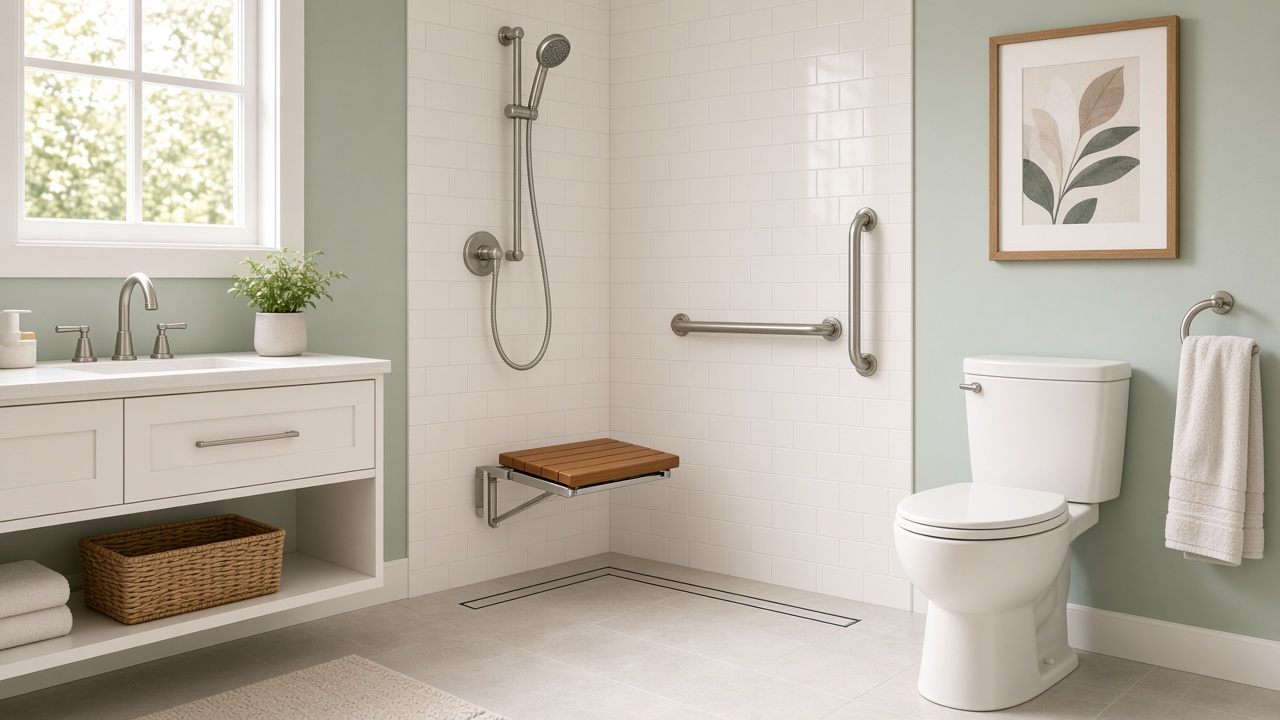
The room you rely on every morning and every night can be rebuilt to keep up with you.
Picture an ordinary morning a few years from now. Your knees are a little stiffer, your eyes want a little more light, and the bathroom you’ve used for decades hasn’t changed at all. That gap between you and the room is worth closing early.
The CDC says falling once doubles your chances of falling again, and about 37 percent of older adults who fall report an injury that needed medical treatment or limited their activity for at least a day. Injuries like these, it notes, can make it hard to get around, handle everyday tasks, or live on your own. The National Institute on Aging (NIA) adds that many falls happen at home, and that making your home safer is one step you can take to help prevent them.
That’s why the bathroom is high on many people’s lists when they plan to age in place. In AARP’s 2024 Home and Community Preferences research, 72 percent of adults 50-plus who plan to modify their homes said they want to upgrade the bathroom. Here are five changes that make the whole room work harder for you, without making it look clinical.
FindMyRenovation
Planning to stay put? Start with the bathroom.
Tell FindMyRenovation about your project, whether that’s a few accessibility improvements or a full remodel. It matches you with local bathroom pros screened for insurance and reputation, so you can compare quotes side by side.
Free · Takes about 5 minutes · No obligation to hire anyone
1. Grab bars where you sit, stand, and step
When you lose your balance, you grab whatever is closest, and in a bathroom that’s often a towel bar or the edge of the sink. NIA’s room-by-room fall-prevention guide recommends mounting grab bars near toilets and on both the inside and outside of your tub and shower, so there’s something solid to hold where you’re most likely to need it.
What to check: For the buildings they cover, the federal ADA Standards mount grab bars 33 to 36 inches above the floor. Most private homes don’t have to follow those rules, but they make a useful yardstick. Ask your installer how each bar will be anchored and whether your walls need extra backing to hold it.
Your move: Ask for bars by the toilet and at the tub or shower entry, not just inside the shower. Get free quotes from local bathroom pros at FindMyRenovation and have each one mark where they’d put them.
2. A shower you can walk (or roll) right into
Stepping over a tub wall on a wet surface is a balance test you take every day. NIA warns that a simple accident like slipping on a wet floor can change your life, and AARP’s research on home modifications lists a no-step shower among the bathroom changes older adults anticipate. For accessible showers in the buildings they cover, the ADA Standards also call for a hand-held shower on a hose at least 59 inches long that doubles as a fixed shower head, which can make it easier to wash while seated.
What to check: Ask whether your floor, drain, and layout can support a curbless or low-threshold entry, and what your options are if not. A fold-down seat is worth discussing too. Let a pro measure before you settle on a design.
Your move: Request quotes for a walk-in or curbless shower through FindMyRenovation, and compare how each pro would handle your space.
Bathroom pros near you
Want a safer bathroom that still feels like home?
FindMyRenovation connects homeowners with local pros for bathroom remodels and accessibility improvements. Answer a few quick questions, then compare quotes and choose the pro who fits your plans and your budget.
Free · Takes about 5 minutes · No obligation to hire anyone
3. Floors that grip, even when they’re wet
NIA notes that for older people, a broken bone can be the start of more serious health problems and can lead to long-term disability. Its home-safety guide recommends nonskid mats, strips, or carpet on all surfaces that may get wet. AARP’s research names non-slip tile on the floor and in the shower or tub among the modifications older adults expect to make.
What to check: Ask each pro to show you slip-resistant tile and shower-floor options and explain how they perform when wet. A remodel is also a good moment to retire loose bath rugs. NIA advises against throw rugs and small area rugs.
Your move: Request free bathroom quotes at FindMyRenovation and compare the flooring each pro recommends.
4. A toilet at a height that’s easier on your knees
Sitting and standing get harder when your knees or hips complain. AARP’s research lists a toilet that sits higher among the bathroom modifications older adults anticipate. For reference, the ADA Standards set toilet seat heights of 17 to 19 inches in public facilities, and allow 15 to 19 inches in the residential units they cover.
What to check: The right height depends on your body, so try a few models in a showroom if you can. NIA recommends grab bars near the toilet, so plan the two together.
Your move: When FindMyRenovation matches you with local pros, ask each one to quote the toilet and its grab bars as one package.
5. Light, easy handles, and room to move
NIA suggests leaving a bathroom light on at night or using a night light that turns on automatically in the dark. In the buildings they cover, the ADA Standards call for controls that work with one hand, without tight grasping, pinching, or twisting of the wrist. If round knobs are getting harder to turn, lever faucets and handles are worth a look.
What to check: Walk the path from your bed to the toilet at night and note the dark spots. Ask whether a vanity with open space underneath, so you can sit while you wash up, would fit your layout. If you have fallen, NIA says your doctor might suggest that an occupational therapist, physical therapist, or nurse visit to assess your home’s safety.
Your move: Ask whether each pro has aging-in-place training, such as the NAHB’s Certified Aging-in-Place Specialist (CAPS) credential. Compare local bathroom pros with FindMyRenovation and put that question on your list.
What to have handy before you request quotes
- Photos and rough measurements: of the tub or shower and the toilet area
- What’s hard today: getting in and out of the tub, standing up, or finding your way at night
- What you may need later: a shower seat, or room for a walker or wheelchair
- Notes from your care team: if a doctor or therapist has made recommendations
- Funding questions: NIA suggests checking with your state housing finance agency, social services department, or community development groups about programs that may help pay for safety updates
Bottom line
Staying in the home you love is a goal many older adults share, and the bathroom is a smart place to start. Grab bars, a walk-in shower, grippy floors, a taller toilet, and better light can each make daily routines easier. No remodel can promise you’ll never fall, but the right changes can help the room keep up with you.
Not sure where to begin? Plenty of homeowners start just to understand their options and pricing. Get free, no-obligation bathroom quotes from local pros at FindMyRenovation.
Your bathroom checklist
Ready to make your bathroom work for the years ahead?
- ✓ Snap a few photos
- ✓ List what’s hard today
- ✓ Think about what you may need later
- ☐ Compare quotes from local pros
Compare quotes from local pros screened for insurance and reputation.
Free · Takes about 5 minutes · No obligation to hire anyone
Disclaimer: FindMyRenovation.com is operated by Click Circle LLC. FindMyRenovation is a marketing and lead-generation platform, not a home service provider or home improvement company, and it does not perform, supervise, or guarantee any renovation work. The service is free to use because some of the home service providers it matches you with pay it a referral fee or commission when you click on their offer, submit a request, or take another qualifying action. That compensation may influence the order in which providers are presented, and not all available providers are included in its network. See our full Advertiser Disclosure. Providers matched to your project may contact you to discuss your quote. Any provider you are matched with is an independent third party, and actual pricing, timelines, and availability depend on that provider and your project. It is your responsibility to verify that any provider carries the insurance required for the work and to review all terms before signing an agreement or making a payment. This article is for general educational purposes only and is not personalized construction, design, medical, or legal advice. Sources: Centers for Disease Control and Prevention (CDC), National Institute on Aging (NIA), AARP, the U.S. Access Board’s 2010 ADA Standards for Accessible Design, and the National Association of Home Builders (NAHB).